Power Washing Your House Exterior Without Wrecking It
Your house is silently screaming for help. Those green streaks on the siding, the dingy gray film coating your once-vibrant brick, the mysterious black dots peppering your soffits, none of it is your imagination. It’s grime, mildew, algae, and years of weather wear staking their claim on your home’s exterior. And the fix? It might be simpler (and more satisfying) than you think. Power washing the exterior of your house is one of those rare home improvement projects that delivers instant gratification. One pass with the wand and you can literally see the dirt melt away. But before you go full pressure-washing pirate on your siding, there are a few things you should know to avoid turning a refresh into a repair bill.
Why Power Washing the Exterior of Your House Actually Matters
Power washing is more than just a curb appeal flex. Over time, organic growth like mold, mildew, and algae can eat away at paint, stain wood, and even compromise certain types of siding. Pollen, dust, and airborne pollutants cling to surfaces and trap moisture against your home.
Regular cleaning isn’t just cosmetic. It actively extends the life of your siding, paint, deck, and even your roof. Think of it as preventative maintenance with a visible “wow” factor.
Here’s what a proper exterior wash can do for your home:
- Boost curb appeal almost instantly (huge if you’re selling)
- Prevent permanent staining from algae and mildew
- Protect your paint job and extend repainting cycles
- Remove allergens and pollutants from outdoor living areas
- Prep surfaces for painting, staining, or sealing
Pressure Washing vs. Soft Washing: Know the Difference
This is where most homeowners get into trouble. Not every surface on your house can handle 3,000 PSI blasting at it. Using too much pressure on the wrong material can strip paint, splinter wood, crack siding, and force water behind your walls.
When to Use Pressure Washing
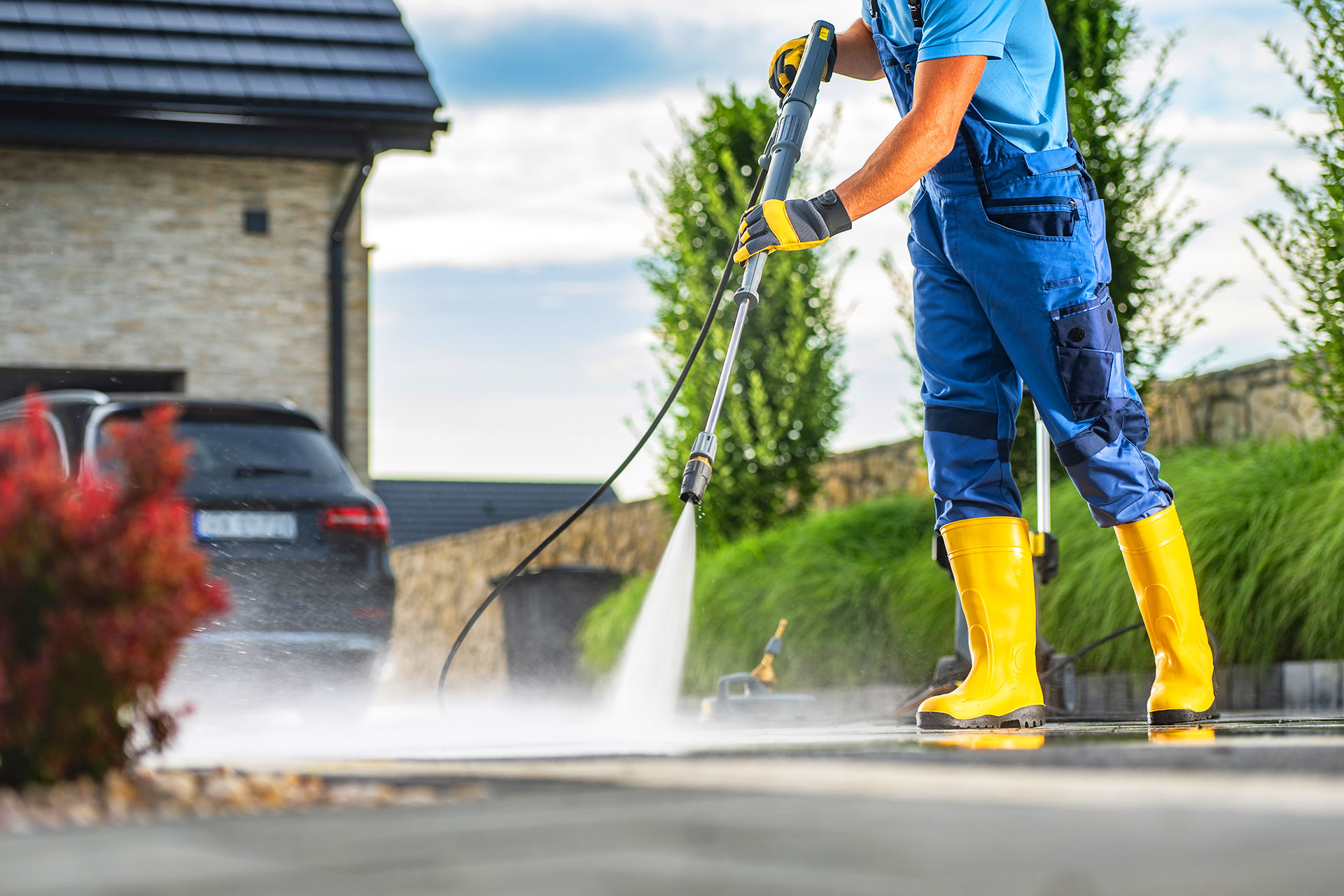
High pressure is great for hard, durable surfaces. Think concrete driveways, brick walkways, stone patios, and unpainted masonry. These materials can stand up to aggressive cleaning without flinching.
When to Use Soft Washing
Soft washing uses lower pressure combined with specialized cleaning solutions. It’s the right choice for:
- Vinyl siding
- Wood siding and trim
- Stucco
- Roof shingles
- Painted surfaces
- Screens and windows
Step-by-Step: How to Power Wash Your House Exterior
1. Prep the Area
Walk around your home and move anything that shouldn’t get soaked. Patio furniture, grills, potted plants, kids’ toys, and door mats need to relocate. Cover delicate landscaping with plastic sheeting or tarps, and tape over electrical outlets, light fixtures, and vents.
Close all your windows and doors tightly. Then double-check them. Water will absolutely find the one window you forgot.
2. Inspect Before You Spray
Look for loose siding, cracked caulk, chipped paint, or damaged trim. Power washing damaged areas will make things worse, fast. Repair what you can before getting the hose out.
3. Choose Your Cleaning Solution
Plain water won’t kill mildew or algae. Most pressure washers have a detergent reservoir. Use a house wash solution designed for your siding type, or mix your own with a gentle bleach and water blend for mildew-prone areas.
4. Start at the Top, Work Down
Apply your cleaning solution from the bottom up to prevent streaking, then let it dwell for 5 to 10 minutes (don’t let it dry on the surface). Rinse from the top down using a wide spray angle, keeping the wand about 2 to 3 feet from the surface.
5. Use the Right Nozzle
Most pressure washers come with color-coded nozzles. For house exteriors, stick with the white (40-degree) or green (25-degree) tips. The red (0-degree) tip is for tough concrete stains and should never touch your siding.
Common Mistakes to Avoid
I’ve seen homeowners crack their own windows, blow water into their attic, and even strip paint clean off their porch posts. The most common pitfalls are completely avoidable if you slow down and pay attention.
- Spraying upward into siding seams: This forces water behind the panels and into your wall cavity
- Holding the wand too close: Maintain at least 24 inches from any painted or wood surface
- Power washing windows: Even moderate pressure can crack seals or shatter glass
- Ignoring electrical hazards: Never spray outlets, fixtures, or your meter
- Working in direct sunlight: Detergent dries too quickly and leaves streaks
When to Hire a Professional Instead
Renting a pressure washer and DIY-ing the job sounds great until you’re standing on a ladder, 12 feet up, holding a kicking wand of pressurized water. Some jobs are simply safer (and more effective) in professional hands.
Consider hiring out if your home is more than one story, has delicate stucco or cedar shake siding, or hasn’t been cleaned in many years. Professionals understand the chemistry behind different stains and have commercial-grade soft wash systems that gently remove buildup without the risk of damage.
How Often Should You Power Wash Your House?
The general rule is once every 1 to 2 years, but it depends on your climate and surroundings. Homes in humid regions or surrounded by trees may need annual cleaning, while drier climates can stretch it further.
Signs it’s time to wash:
- Visible green, black, or gray streaks on siding
- Spider webs and dirt collecting under eaves
- Dingy or “flat” looking paint
- Mildew smell near shaded walls
- You’re prepping to paint, sell, or host an outdoor event
Final Thoughts
Power washing the exterior of your house is one of the highest-impact, lowest-effort upgrades you can make to your property. It protects your investment, restores your curb appeal, and gives your home that “freshly painted” look without the actual painting. The key is matching the right pressure and technique to each surface, taking your time with prep, and knowing when to call in backup.